This announcement slider rotates automatically and stops after 5 seconds.
Free Shipping on orders over $100 *AK, HI, PR restrictions may apply

This announcement slider rotates automatically and stops after 5 seconds.
Free Shipping on orders over $100 *AK, HI, PR restrictions may apply
November 13, 2026 14 min read
Medium-length hair is often considered the sweet spot between short and long. It gives you enough length to experiment with waves, curls, layers, ponytails, and updos without requiring the same amount of styling time as longer hair.
The challenge is figuring out how to make it look intentional. Medium hair can sometimes fall flat, flip outward at the ends, or lose its shape throughout the day. The right styling technique can make a noticeable difference, whether you prefer a relaxed, natural look or something more polished.
There are also plenty of ways to style medium hair for both men and women. A shoulder-length cut can be worn with soft waves, a smooth blowout, or face-framing layers, while men's medium-length styles offer options ranging from swept-back looks to natural texture and more defined shapes.
The key is understanding your hair's natural texture, choosing products that work with it, and knowing how to create the finish you want.
Medium-length hair is versatile enough for blowouts, curls, waves, ponytails, and half-up styles.
The best styling technique depends on your hair texture, density, layers, and desired finish.
A round brush and blow dryer can create volume, smoothness, and movement.
Mousse can help add body to fine hair and define curls or waves.
Men can use styling cremes and texture pastes to create everything from relaxed movement to more structured hairstyles.
Heat protection and lightweight finishing products help maintain a polished look without weighing hair down.
Medium hair can be styled for everyday wear, professional settings, or special occasions.
Medium-length hair generally falls somewhere between the shoulders and a few inches below the collarbone. It is long enough to tie back, create waves, and experiment with different styling techniques, but short enough to maintain relatively easily.
Some common medium-length hairstyles include:
Shoulder-length cuts
Collarbone-length bobs
Layered medium hair
Medium-length shags
Long bobs (lobs)
Men's medium-length layered cuts
Medium-length curly hairstyles
The exact length isn't as important as the way the haircut is shaped. Layers, bangs, face-framing pieces, and natural texture can all change how the finished style looks.
This is also why two people with the same hair length can have completely different styling routines. Fine, straight hair may need more root lift, while thick or curly hair may benefit from more definition and smoothing.
Good styling starts before you pick up a brush or curling iron. The condition of your hair, how much moisture it holds, and the products you apply can all affect the finished result.
Start with clean, damp hair if you're planning to blow-dry or create a polished style. Gently remove excess water with a towel rather than aggressively rubbing the strands, which can create friction and frizz.
Before styling, think about what you want to achieve:
More volume: Choose lightweight volumizing products that won't flatten the roots.
Smoother hair: Use a smoothing product to help control frizz and flyaways.
Defined curls: Apply a curl-friendly styling product while the hair is damp.
A sleek finish: Use a brush to create tension while directing airflow down the hair shaft.
Natural movement: Avoid applying too many products that can make the hair feel stiff.
For heat styling, choose a product that offers heat protection. The Sweet Almond Mint Styling Creme is one Wen option that provides heat protection, frizz control, and added body, volume, and shine
If you're unsure where to start, a basic blow-dry routine is one of the easiest ways to create a finished look with medium-length hair. You can adjust the technique depending on whether you want volume, smoothness, or movement.
Start with damp hair rather than soaking wet strands. Gently squeeze out excess water and detangle using a suitable brush or wide-tooth comb.
Work your chosen styling product through the hair, concentrating on the areas that need the most support. Avoid applying too much product near the roots if your hair tends to become flat or oily.
Sectioning makes medium-length hair easier to manage, particularly if you have thick or layered hair. Start with the bottom layers and work your way upward, keeping the remaining hair secured with clips.
Use a round brush to lift the roots and guide the hair in your desired direction. For a smoother finish, direct the airflow down the hair shaft. For additional volume, lift the roots while drying and allow each section to cool before releasing it.
Once the hair is dry, use your fingers to separate the layers and create movement. A small amount of Finishing Treatment Creme and Smoothing Glossing Serum can help smooth flyaways and add shine without making the hair feel heavy.
The result should look polished but still natural. Medium-length hair generally looks better when it retains some movement rather than being overly styled.
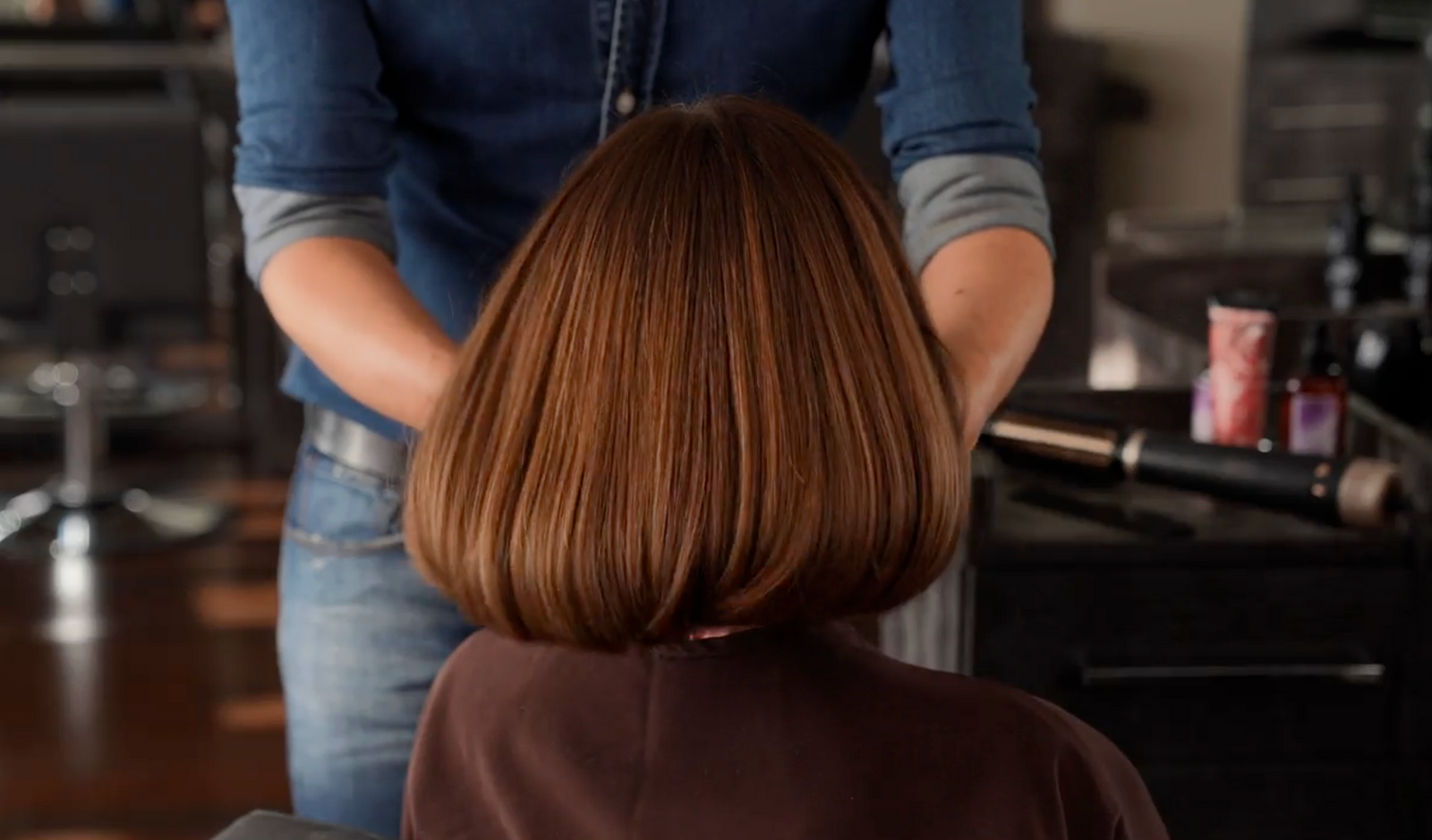
Shoulder-length hair can sometimes be tricky because the ends sit right around the shoulders, which can cause them to flip outward or lose their shape.
The easiest way to control this is to pay attention to the direction in which you're drying the ends. If you want a smooth, rounded finish, use a round brush to guide the ends inward. For a more relaxed look, allow them to bend slightly outward or alternate the direction of different sections.
Some easy shoulder-length styles include:
Soft blowout: Use a round brush to create lift at the roots and a gentle curve through the ends.
Loose waves: Add bends through the mid-lengths with a curling iron, alternating the direction of each section.
Sleek and straight: Smooth the hair with a brush and finish with a lightweight serum.
Half-up hairstyle: Gather the top section and secure it with a claw clip or hair tie.
Textured ends: Use a small amount of styling product to separate layers and create more movement.
For a smoother blowout, the Wen Brush Dryer Styling Tool: Short-Medium Kit is designed specifically for shorter and medium-length hair above the collarbone. Its round-brush attachments help create tension and smoothness while the airflow dries the hair.
If you're transitioning from a shorter haircut into a shoulder-length style, you can also explore our guide on how to style short hair for additional techniques.

Medium-length hair offers plenty of styling options without requiring complicated techniques. You can create a completely different look simply by changing your part, adding a little texture, or styling the ends differently.
Here are some versatile styles worth trying.
Loose waves are one of the easiest ways to add movement to medium-length hair. They work particularly well with layers because the different lengths create dimension rather than making the hair look like one uniform curl.
Use a medium-barrel curling iron and work in sections, leaving the last inch or so of the ends relatively straight for a more relaxed finish. Alternate the direction of your curls so the waves don't all fall together.
Once the hair has cooled, gently run your fingers through it to loosen the shape. Finish with a little smoothing product if you notice flyaways.
A blowout is a great option when you want medium hair to look fuller and more finished.
Start with damp hair and use a round brush to lift the roots while smoothing the lengths. Pay particular attention to the face-framing sections, since the direction of these pieces can change the entire look.
For added volume, allow the sections to cool in their shape before brushing them out. This helps create a softer, bouncier finish rather than a flat, overly straight result.
A half-up hairstyle is ideal when you want your hair away from your face without tying all of it back.
Gather the top section of hair and secure it at the crown or back of your head. You can keep the finish sleek or gently pull at the crown for a little more volume.
This style works with straight, wavy, and curly medium-length hair. You can also use a claw clip, decorative barrette, or small hair tie to change the overall appearance.
Face-framing layers can make medium-length hair look softer and more dimensional. They are particularly effective when paired with curtain bangs, which sweep away from the face and blend into the rest of the haircut.
To style them, start with slightly damp hair and use a round brush to guide the front sections outward. Direct the airflow toward the roots and rotate the brush away from your face as the hair dries.
For more detailed instructions, see Chaz Dean's guide on how to style curtain bangs, which covers blow-drying, rollers, curling irons, and heatless techniques.
Medium-length hair for men offers considerably more styling flexibility than shorter cuts. There is enough length to create movement, sweep the hair backward, experiment with a side part, or wear a more relaxed, textured style.
The biggest consideration is maintaining shape without making the hair look overly stiff or weighed down.
A swept-back hairstyle works well when the hair has enough length to move away from the forehead.
Start with damp hair and use a blow dryer to direct the roots backward. A brush or your fingers can help guide the hair while maintaining some natural movement.
Once dry, work a small amount of styling product through the lengths to define the shape. Avoid applying too much near the roots, as this can make the hair look greasy rather than naturally textured.
If you prefer something less structured, focus on enhancing the hair's natural movement.
Use your fingers to create separation through the top and sides rather than combing everything into one uniform direction. A small amount of texture paste can help define individual sections while keeping the overall style relaxed.
Wen Men® Control Texture Paste offers a semi-matte finish with medium-firm hold, making it an option for more defined, textured styles.
A side part is a simple way to make medium-length hair look more polished.
Create the part while the hair is damp, then blow-dry the strands in the direction you want them to sit. Use a comb for a cleaner finish or your fingers if you prefer a softer appearance.
For styling definition,Wen Men® Styling Creme provides hold, shine, and frizz control. It is designed for both wet and dry looks, so it can work with different styling preferences.
You can also pair the styling creme with Wen Men Control Texture Paste when you want more definition and a semi-matte finish.
Medium-length curly hair can look full and dimensional, but the styling process is different from working with straight hair. The goal is to enhance the natural curl pattern while maintaining enough moisture and definition to prevent the hair from becoming overly frizzy.
Start with wet or damp hair and apply a curl-friendly styling product in sections. Use your fingers to distribute it through the lengths rather than repeatedly brushing through the curls.
Scrunch the hair upward to encourage the curl pattern, then allow it to air-dry or use a diffuser on a gentle setting. Avoid constantly touching the curls while they dry, since this can disrupt their shape.
For a mousse-based styling option, Pomegranate Nourishing Mousse can be applied to wet hair from mid-length to ends. There are also instructions for applying the mousse in sections when air-drying curly hair.
A few additional techniques can help:
Use a wide-tooth comb to detangle while the hair is wet.
Avoid brushing through completely dry curls.
Use a diffuser attachment to help distribute airflow.
Apply product evenly rather than concentrating everything in one area.
Allow curls to dry before separating or reshaping them.
Medium-length hair is particularly easy to dress up because you have enough length to create movement, volume, and different shapes without needing a complicated updo.
The best style depends on the occasion and how much time you want to spend getting ready.
For a more polished look, try creating loose waves with braids. Start with slightly damp hair, apply a small amount of styling mousse, and divide your hair into two or more sections before loosely braiding each one. Once your hair is completely dry, undo the braids and gently separate the waves with your fingers.
Finish with a small amount of smoothing serum through the mid-lengths and ends to add shine and help control frizz. Tuck one side behind your ear for a more asymmetrical, evening-ready look.
If you prefer something more understated, a smooth blowout or straight style can look just as sophisticated.
Use a brush to guide the hair downward while drying. Finish with one or two drops of Sweet Almond Mint Smoothing Glossing Serum to help smooth flyaways and enhance shine.
A medium-length ponytail can look polished without requiring much effort.
Gather the hair at the crown or nape, depending on the look you want, and smooth the sides with a brush. Leave a few face-framing pieces loose if you prefer a softer appearance.
You can also wrap a small section of hair around the elastic to conceal it and create a more finished look.
For more ideas on creating a glossy finish, see How to Get Shiny Hair.
You don't need to use a heat styling tool every time you want to change your hairstyle. Medium-length hair is particularly easy to experiment with because it can hold braids, twists, and rollers without requiring a lot of extra preparation.
For loose waves, try braiding slightly damp hair before bed and removing the braid once the hair is completely dry. The result will depend on your natural texture and how tightly the braid is secured, but this can create a softer wave pattern without using a hot tool.
You can also use rollers to create volume around the crown or shape the front sections away from the face. This is especially useful if you have layers or curtain bangs that need a little more direction.
Some other heatless options include:
Twisting damp sections and allowing them to dry.
Using large rollers for a softer, fuller shape.
Creating a loose overnight bun for relaxed bends.
Using clips to hold face-framing pieces in place while drying.
The important thing is to let the hair dry fully before removing the rollers, braids, or clips. Taking them out too early can cause the style to fall flat.
Medium hair can sometimes look flat, especially when the ends are all one length or the roots become weighed down by styling products.
The easiest way to create more volume is to focus on the roots before the hair is completely dry. Use a round brush to lift sections upward while directing airflow toward the base of the hair.
You can also change your part to create a little more lift. Hair that is consistently worn in the same direction can start to settle into that shape, so switching sides occasionally may help create a fuller appearance.
Product choice also makes a difference.Sweet Almond Mint Nourishing Mousse is designed to add volume, bounce, and shine across hair types while providing hold without a sticky or crunchy feel.
For the best results, apply mousse to wet hair through the mid-lengths and ends, then use any remaining product on your hands to lightly smooth over the crown.
Even a relatively simple hairstyle can become difficult to maintain when the wrong technique or amount of product is used.
Some of the most common mistakes include:
Using too much product: Heavy styling creams and oils can make medium hair look flat or greasy.
Ignoring the ends: Shoulder-length hair can flip outward or become uneven if the ends aren't shaped intentionally.
Using too much heat: Repeated high-heat styling can affect the condition of the hair over time.
Brushing curls when dry: This can disrupt the natural curl pattern and increase frizz.
Skipping sectioning: Trying to dry all your hair at once can make it harder to create even volume and smoothness.
Over-styling: Trying to make every strand perfectly uniform can leave the finished look stiff rather than natural.
Medium-length hair often looks best when the overall shape is intentional but still allows some movement. Focus on getting the roots, layers, and ends to work together rather than trying to control every individual strand.
A2025 study published in theJournal of Cosmetic Dermatology examined how repeated blow-drying affects the structure and condition of hair fibers.
In the study, researchers repeatedly wetted and blow-dried hair samples 30 times to simulate daily hair-dryer use over approximately one month. Compared with untreated hair, the repeatedly dried samples showed lifted cuticles, reduced water content, changes in mechanical properties, and increased protein release.
The researchers also developed a controlled heat-damage model to examine how different temperature exposures affected hair structure.
Some important findings included:
Repeated blow-drying can alter the outer cuticle layers.
Hair samples showed reduced water content after repeated drying.
Mechanical properties changed following repeated heat exposure.
Higher heat exposure produced more pronounced structural changes.
The study used hair tresses under laboratory conditions rather than human participants, so it should not be interpreted as a direct prediction of what will happen to every person's hair. However, it provides useful evidence for why styling technique and temperature control matter.
For medium-length hair, this is particularly relevant because blow-drying is often used to create volume, smooth layers, and shape the ends. Keeping the dryer moving, avoiding unnecessary repeated passes, and choosing controlled heat settings can help reduce excessive exposure.
A good hairstyle doesn't have to start from scratch every morning. Once you've created the shape you want, a few small habits can help maintain it for longer.
Try to avoid constantly running your fingers through the hair, particularly if you've created curls or waves. Excessive touching can separate the sections and increase frizz.
If your roots become flat overnight, changing your part or refreshing the front sections with a little moisture and airflow can help bring the style back. You don't necessarily need to restyle the entire head.
It's also worth paying attention to how often you wash your hair. The ideal schedule depends on your scalp, texture, and lifestyle rather than a fixed number of days.
The goal is to maintain the shape and condition of your hair without repeatedly putting it through an entire styling process.
The best way to style medium hair depends on your natural texture, haircut, and the finish you want. You can create a polished blowout, loose waves, defined curls, a sleek ponytail, or a more relaxed everyday style with relatively simple techniques.
For shoulder-length hair, focus on controlling the ends and creating movement through the layers. For men's medium-length styles, use a blow dryer to establish direction and a lightweight styling product to define the shape. For medium curly hair, work with the natural curl pattern using moisture, mousse, and gentle drying techniques.
The biggest difference usually comes down to choosing the right products and understanding how to use your tools. Medium-length hair gives you enough versatility to change your look without needing a complicated routine.
How often you need a trim depends on your haircut, hair condition, and how quickly you want to maintain its shape. Layered styles may remain wearable as they grow out, while blunt cuts and structured shapes can become less defined as the length increases. Regular trims can also help remove split ends before they travel further up the hair shaft.
Hair length alone doesn't determine how old or young someone looks. Factors such as layers, volume, bangs, and how the hair frames the face can influence the overall appearance. Medium-length cuts are versatile because they can be adjusted to create softer framing, more movement, or a sharper, more structured finish.
Yes. Medium-length hair can work well for finer strands, particularly when the haircut includes layers or a shape that creates the appearance of more fullness. Keeping the ends from becoming overly wispy and using lightweight products can also help. Excessive layering may sometimes make fine hair look thinner, so the haircut should be tailored to the individual's density.
The direction in which you dry your hair plays a major role in how the ends settle. Use a round brush to guide the ends inward or outward depending on the finish you want, and allow each section to cool before releasing it. If your hair naturally flips at the shoulders, a slightly different length or layering pattern may also make it easier to manage.
Yes. Medium-length hair is usually long enough for low ponytails, small buns, half-up styles, and claw clips. If shorter layers keep falling around your face, use small clips or headbands to secure them. Avoid tying the hair too tightly, especially when it is wet or already under tension.
Growing-out hair often has uneven lengths, particularly around the sides and front. Use styling techniques that blend those sections together, such as soft waves, side parts, or half-up styles. Styling creams and lightweight finishing products can also help control pieces that don't quite reach the length needed for a ponytail or bun.